Laboratory & Industrial Vacuum Drying Oven Selection Guide: Drying Efficiency and Temperature Control Precision with DZ-4BCII
24 02,2026
Zhengzhou Keda Mechanical Instrument Equipment Co., Ltd.
Technical knowledge
This article provides a practical, data-informed guide for selecting vacuum drying ovens for laboratory research and industrial production, with a focus on two decision-critical factors: drying efficiency and temperature control precision. It explains how key specifications—usable chamber volume, vacuum performance, heating uniformity, and intelligent control algorithms—directly influence drying speed, product consistency, and the risk of oxidation or thermal damage. Highlighting the DZ-4BCII digital vacuum drying oven, the guide summarizes its performance advantages in stable vacuum maintenance, accurate temperature regulation, and repeatable process control, supported by application-oriented scenarios from R&D, pharmaceuticals, and manufacturing. A structured comparison with common market alternatives clarifies differentiators such as control stability, monitoring features, and process safety. Finally, the article reviews industry trends toward smart automation, energy efficiency, and compliance-driven documentation, and includes brief interactive checkpoints to help readers match equipment capabilities to real workflows and quality requirements—encouraging technical consultation for best-fit configuration.
Lab & Industrial Buying Guide · Digital Vacuum Drying · Temperature Precision · Efficiency
How to Choose a Laboratory or Industrial Drying Oven: The Real Trade-Off Between Drying Speed and Temperature Accuracy
In R&D labs, pharmaceutical QC, and small-to-mid industrial production, a drying oven is rarely “just a heated box.” It is a process tool that can either protect sample integrity—or quietly compromise it through oxidation, uneven heating, or imprecise control. This guide explains what experienced buyers actually evaluate: drying efficiency (how fast you reach stable dryness) and temperature control precision (how reliably you avoid heat damage).
1) Start With the Application: What Are You Drying, and What Are You Protecting?
A common purchasing mistake is selecting by chamber size alone. The correct starting point is the material risk profile: volatile solvents, oxygen-sensitive powders, heat-labile APIs, electronics components, polymers, or hygroscopic salts all behave differently. When the process is sensitive, vacuum drying often outperforms conventional hot-air ovens because it reduces the boiling point and limits oxidation.
Quick checkpoint: If your material shows discoloration, odor change, loss of activity, or sticky surface after drying, the issue is usually oxygen exposure, temperature overshoot, or non-uniform heating—not simply “insufficient time.”
Buyers who prioritize yield and repeatability typically narrow the shortlist to a digital vacuum drying oven with reliable setpoint stability, strong sealing, and a control system that holds temperature steady even as moisture release changes the internal heat load.
2) Drying Efficiency: The Metrics That Predict Real Throughput
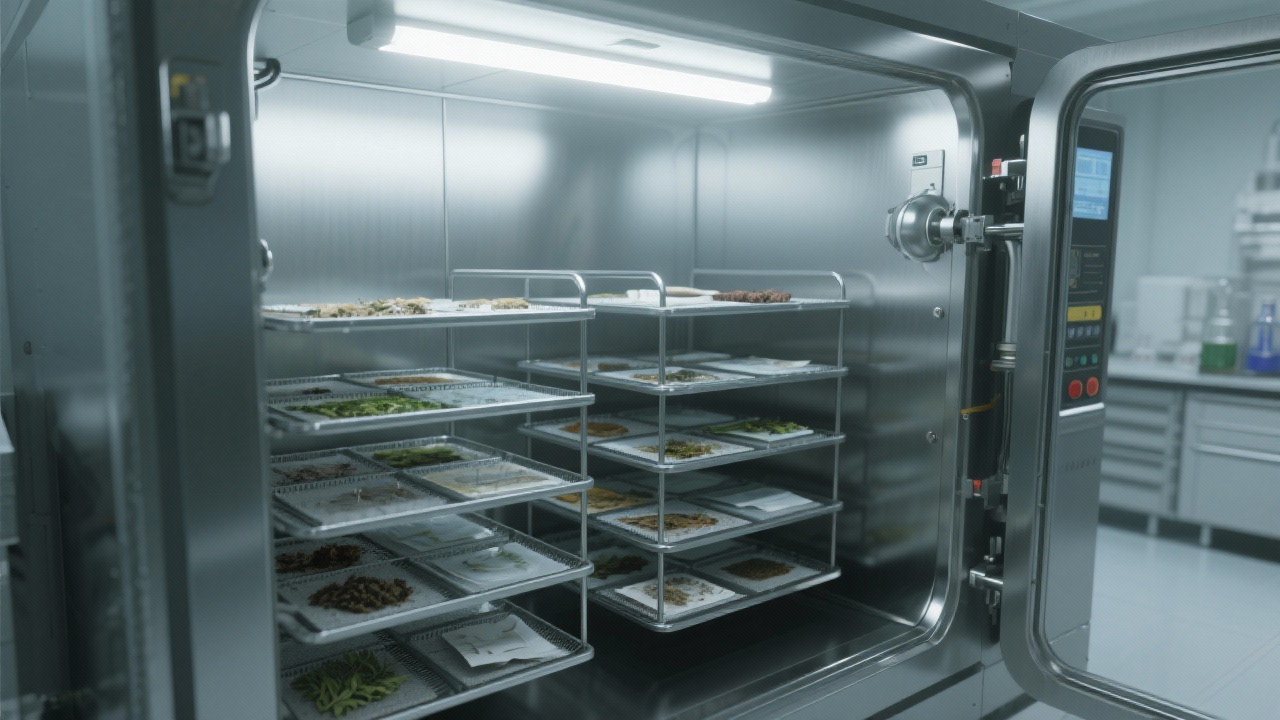
“Fast drying” is not only about higher temperature. In practice, efficiency comes from a stable vacuum environment, effective heat transfer, and a chamber layout that minimizes cold spots. For many solvents, pulling vacuum can reduce boiling point dramatically (e.g., water boils around ~45°C at ~100 mbar), so drying can proceed at gentler temperatures—often with better product quality.
Key indicators to compare (lab and industrial use)
| Indicator |
What “good” looks like |
Why it matters |
| Ultimate vacuum |
≤ 133 Pa (≈1 Torr) for demanding applications |
Lower pressure accelerates solvent removal and reduces oxidation risk |
| Vacuum stability |
Leak rate low enough to hold pressure without constant pump correction |
Stable pressure prevents “stalling” during late-stage drying |
| Heating uniformity |
Chamber uniformity within ±2°C (typical target) |
Avoids uneven residual moisture and localized overheating |
| Recovery time |
Returns to setpoint quickly after door open/load |
Predictable cycle times, easier SOP control |
| Usable capacity |
Enough shelf area for airflow/heat transfer clearance |
Overfilling increases cycle time more than most teams expect |
In side-by-side evaluations, teams often find that a unit with a slightly smaller chamber but stronger vacuum stability and better heat uniformity delivers higher daily throughput—because rework and repeated drying cycles drop sharply.
3) Temperature Control Precision: Where Product Quality Is Won (or Lost)
Temperature accuracy is not only a spec on a datasheet—it shows up in real outcomes: assay retention, color stability, particle morphology, and batch-to-batch consistency. For many heat-sensitive materials, the difference between “safe” and “damaging” can be a narrow window.
What to look for in the control system
A digital PID controller with calibrated sensing and minimal overshoot is a practical baseline. In high-value drying tasks, buyers typically prefer systems that support alarm thresholds, timed programs, and stable operation under changing moisture load. In many lab environments, aiming for ±0.5°C setpoint stability and ≤1°C overshoot is a realistic benchmark for protecting sensitive samples.
Uniformity vs. accuracy (don’t mix them up)
Accuracy is how close the average chamber temperature is to your setpoint. Uniformity is how consistent temperature is across shelves and corners. For drying, uniformity is often the hidden driver of repeatability: if one shelf runs 3–5°C hotter, it can trigger localized degradation even when the controller reads “perfect.”
Buyer question: Is the team trying to reduce total drying time, or reduce variance between runs? If your pain point is inconsistent QC results, temperature uniformity and control stability usually deliver the fastest ROI.
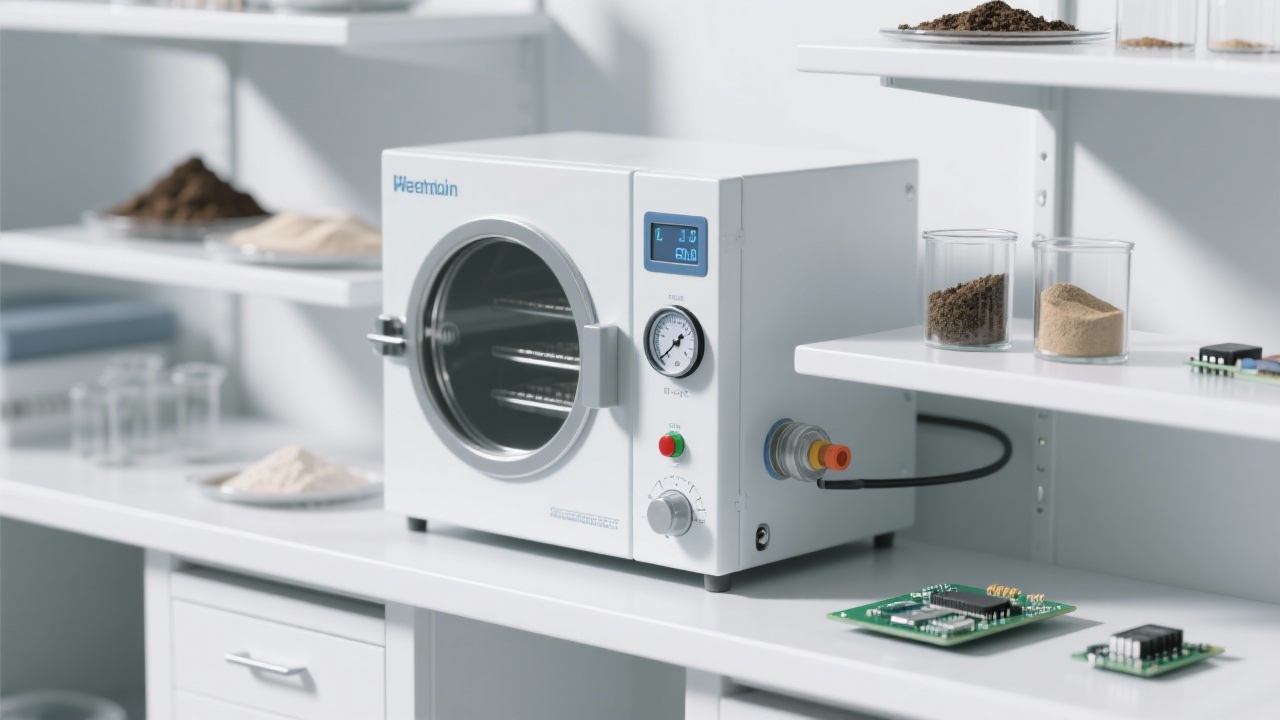
4) Why the DZ-4BCII Digital Vacuum Drying Oven Stands Out in Efficiency + Precision
In a market where many vacuum ovens appear similar, performance differences typically emerge in sealing quality, control logic, and long-run stability. The DZ-4BCII digital vacuum drying oven is positioned for users who need both fast moisture/solvent removal and tight temperature management—especially when oxidation and thermal damage must be minimized.
Practical advantages buyers notice during validation
- Vacuum-assisted low-temperature drying: helps protect heat-sensitive substances by enabling effective drying at gentler setpoints.
- Digital control for repeatable SOPs: supports consistent cycles across operators and shifts, reducing re-runs and investigation workload.
- Stable thermal performance: designed to reduce overshoot and maintain steady setpoints—critical for powders, coated parts, and sensitive formulations.
- Application flexibility: appropriate for research labs, pilot-scale production, and industrial QA where one oven may serve multiple SKUs.
| Decision factor |
Typical baseline models |
What to verify with DZ-4BCII |
| Cycle repeatability |
Stable only under light loads |
Stable control under varying moisture release and batch loads |
| Oxidation risk |
Hot-air reliance increases exposure |
Vacuum environment supports oxygen-sensitive processes |
| Temperature uniformity |
Varies by chamber design |
Shelf-to-shelf consistency suitable for QC-driven drying |
| Operator usability |
Basic knobs / limited logging |
Digital interface for consistent operation and clearer parameter control |
For teams managing validation and documentation, “precision” often means fewer deviations: tighter control reduces out-of-spec moisture results and prevents subtle degradation that only appears later in stability tests.
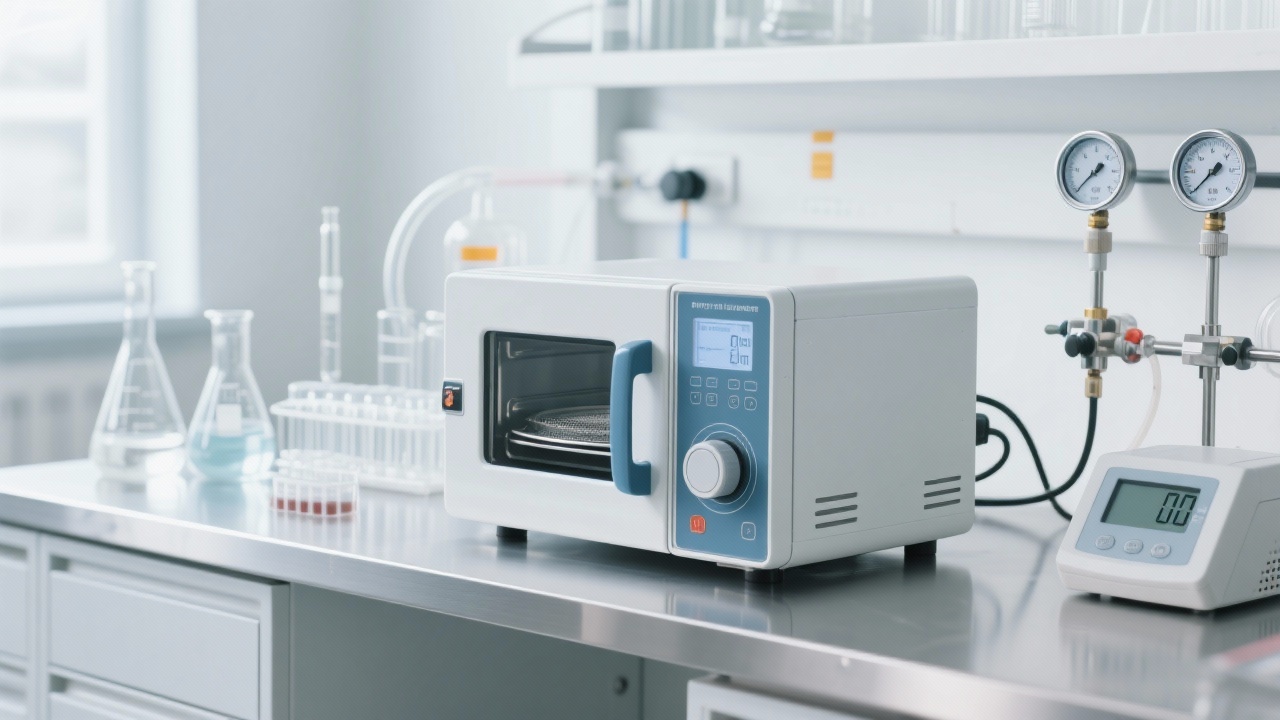
5) A Ground-Level Case Example (What Efficiency + Precision Looks Like in Practice)
Consider a mid-sized lab handling moisture-sensitive polymer samples for formulation screening. Using a conventional hot-air oven at 80–90°C, the team observed occasional yellowing and inconsistent mass loss. After switching to vacuum drying at a lower setpoint (commonly 50–60°C under reduced pressure), the team reported more stable appearance and tighter repeatability, with typical drying time reductions in the range of 20–35% depending on sample thickness and solvent content. The operational takeaway was simple: lower oxygen exposure and reduced thermal stress improved both quality and throughput.
This pattern is frequently echoed in pharmaceutical and electronics workflows where “dry” is not enough—materials must be dry without damage, and the process must be reproducible across operators.
Interactive check: If you could improve just one metric in your current drying process, which would it be—shorter cycle time, lower oxidation, tighter temperature uniformity, or more consistent final moisture? Your answer usually points directly to the right oven configuration.
6) Market Direction: Smarter, Greener, More Verifiable Drying
Across laboratories and factories, drying equipment is trending toward intelligent control, energy efficiency, and process verifiability. Buyers increasingly request features like stable digital control, clearer parameter visibility, and safer operation—because modern QA expectations extend beyond results to the integrity of the process itself.
In that context, a digital vacuum drying oven is not simply an upgrade—it is often a pragmatic response to stricter quality demands, more valuable materials, and the need to run consistent batches with fewer manual adjustments.
Need a Process-Matched Configuration for the DZ-4BCII Digital Vacuum Drying Oven?
Share your material type, target moisture level, batch size, and allowable temperature range. A proper recommendation typically includes vacuum level targets, shelf loading suggestions, and control parameters aligned with your SOP—so you can improve throughput without risking oxidation or heat damage.
Request DZ-4BCII technical details & application guidance
Typical response includes recommended operating ranges, validation considerations, and suitable options for lab or industrial workflows.