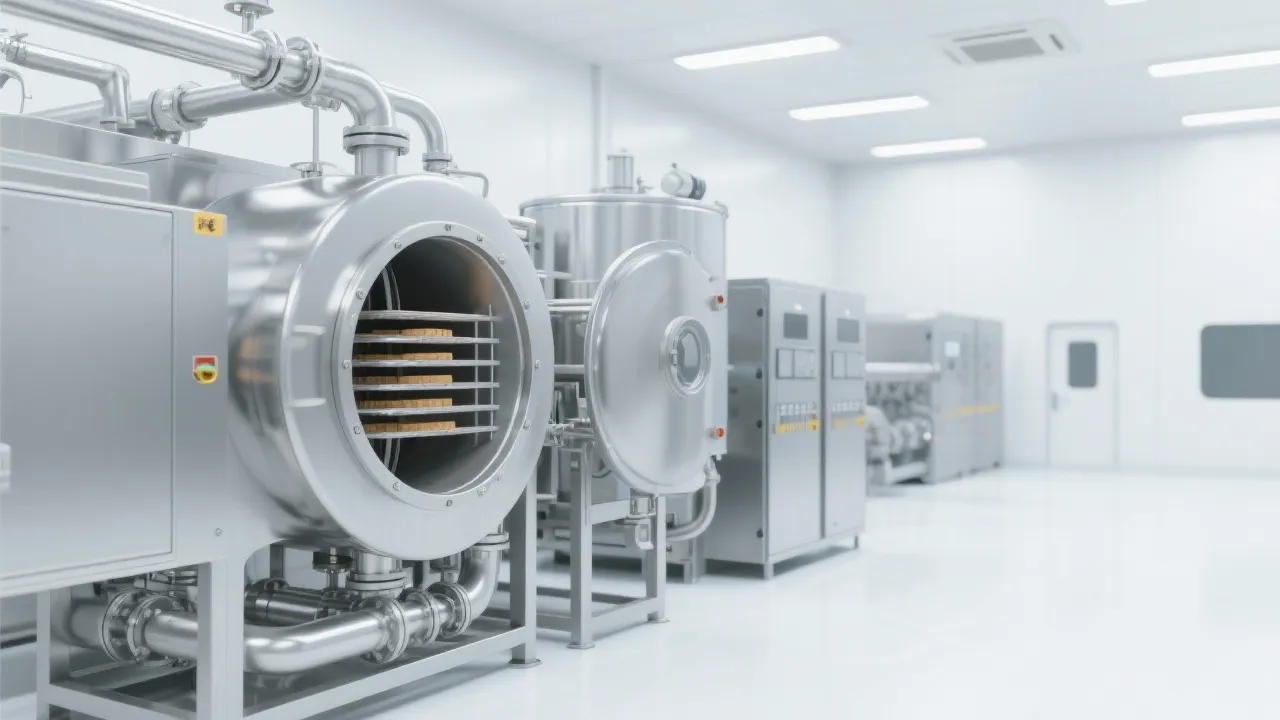
How Vacuum Dryers Achieve Low-Temperature, High-Efficiency Drying by Reducing Pressure

26 12,2025
Zhengzhou Keda Mechanical Instrument Equipment Co., Ltd.
Knowledge
This article explains the physics behind vacuum drying—how lowering pressure reduces the boiling point of water and solvents, enabling efficient drying at lower temperatures. It explores heat transfer mechanisms in vacuum environments, the importance of precise temperature control (e.g., 0.1°C accuracy), and how different applications—such as lithium battery electrode degassing, PCB curing, and chemical sample drying—require tailored vacuum levels and temperature settings. Practical guidance helps researchers and engineers avoid common issues like sample charring or residual solvent, while improving process stability and energy efficiency. Learn how to optimize your vacuum drying parameters for better outcomes.
营销主题配图_1763950819821.jpg

Why Vacuum Drying Works: How Lower Pressure Enables Efficient, Low-Temperature Processing

In laboratories and industrial settings, vacuum drying has become a preferred method for materials sensitive to heat or prone to contamination. Unlike conventional air-drying methods that require high temperatures (often above 100°C), vacuum drying leverages physics—specifically the relationship between pressure and boiling point—to achieve efficient dehydration at much lower temperatures.

The Science Behind the Process

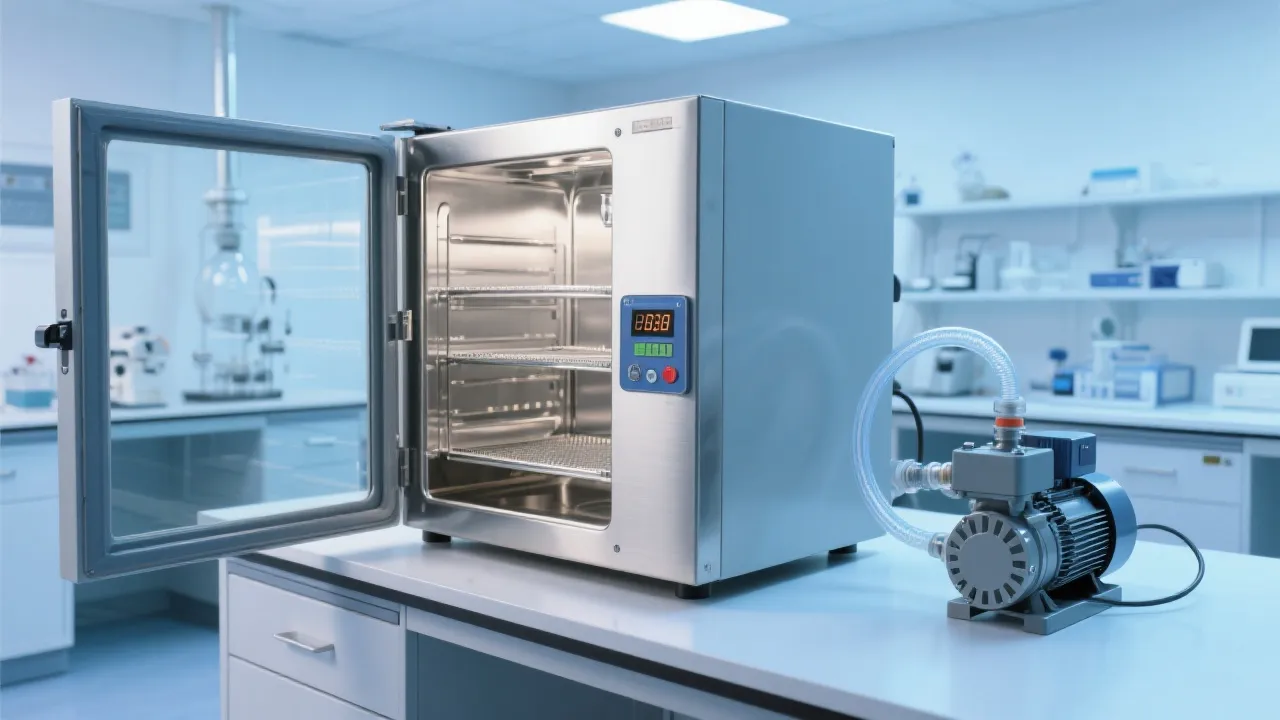
At standard atmospheric pressure (101.3 kPa), water boils at 100°C. But when pressure drops to around 10–20 kPa—a typical range in many vacuum chambers—the boiling point of water falls below 50°C. This means moisture can be removed from samples without thermal degradation, making it ideal for organic compounds, polymers, and delicate electronics.

Heat transfer also changes significantly under vacuum. Convection is nearly eliminated, so conduction and radiation become the primary mechanisms. For this reason, precise temperature control (±0.1°C) is critical—not just for uniformity, but to avoid localized overheating that could cause charring or incomplete solvent removal.

Application-Specific Settings Matter

Different applications demand different vacuum levels and temperature profiles:

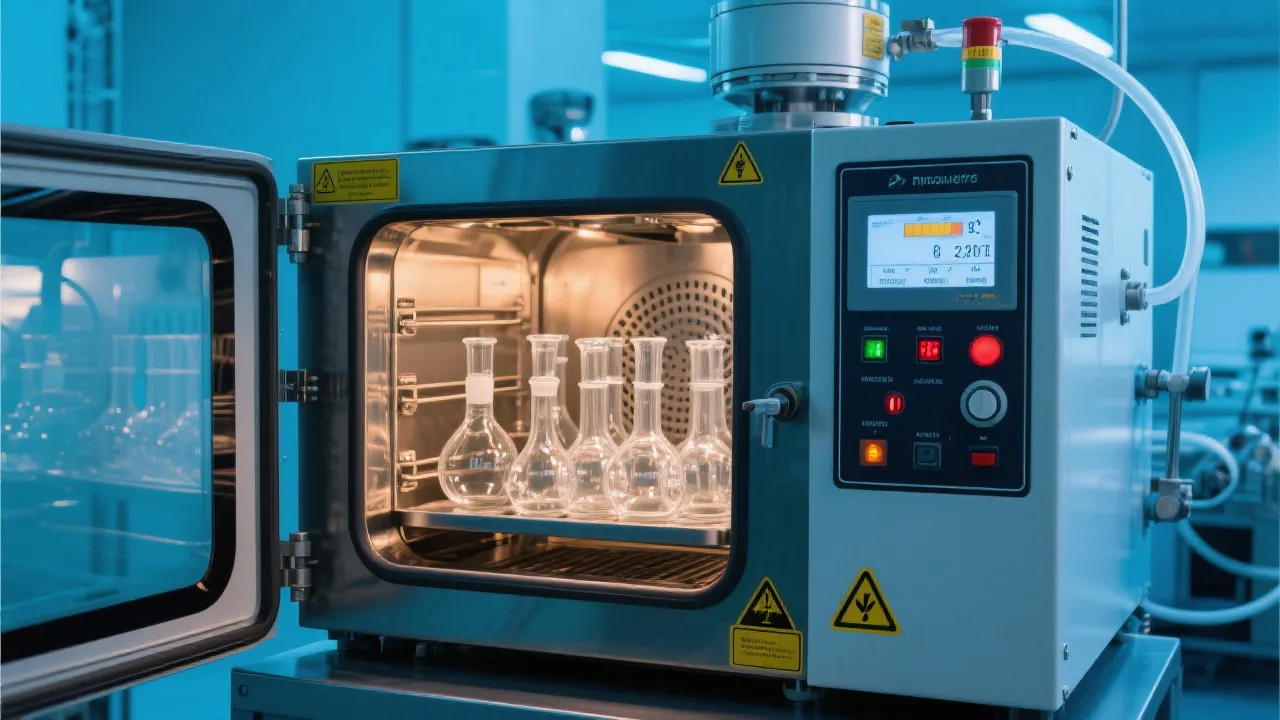
  • Li-ion battery electrode drying: Use moderate vacuum (5–15 kPa) with controlled heating (60–80°C) to prevent lithium salt decomposition.
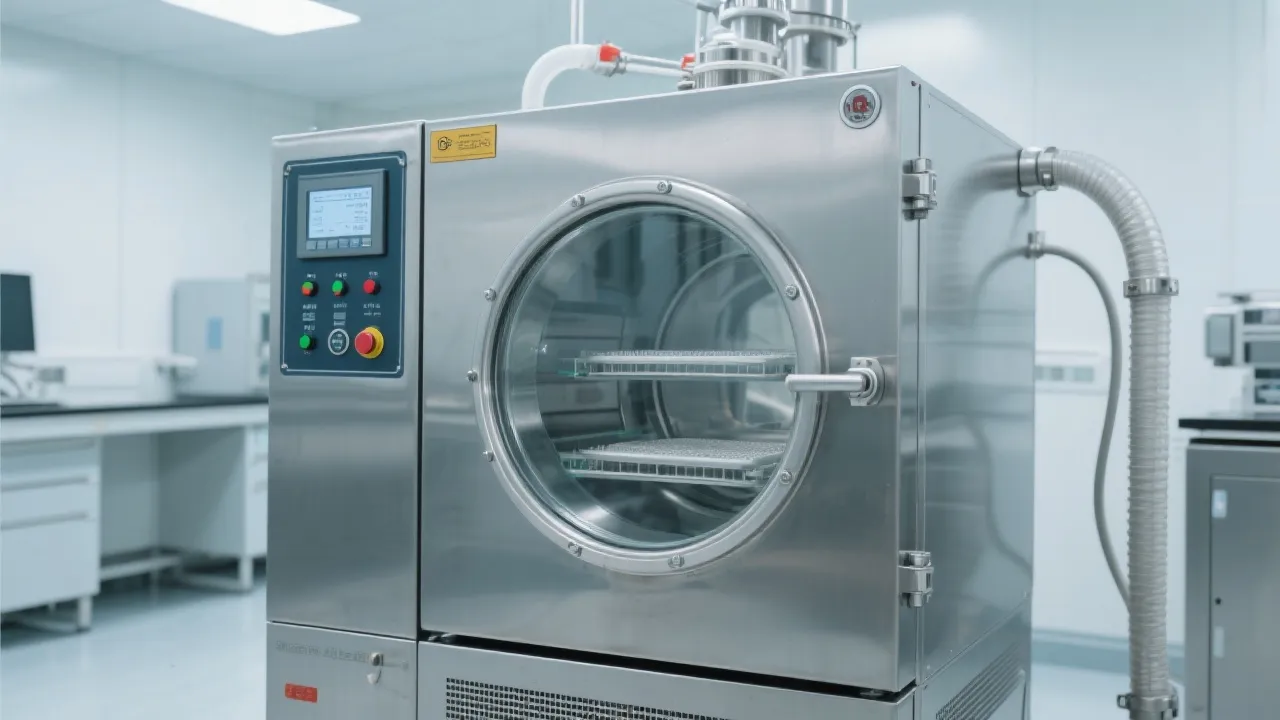
  • PCB board curing: Higher vacuum (1–5 kPa) combined with faster ramp rates helps remove residual solvents from solder paste without warping.
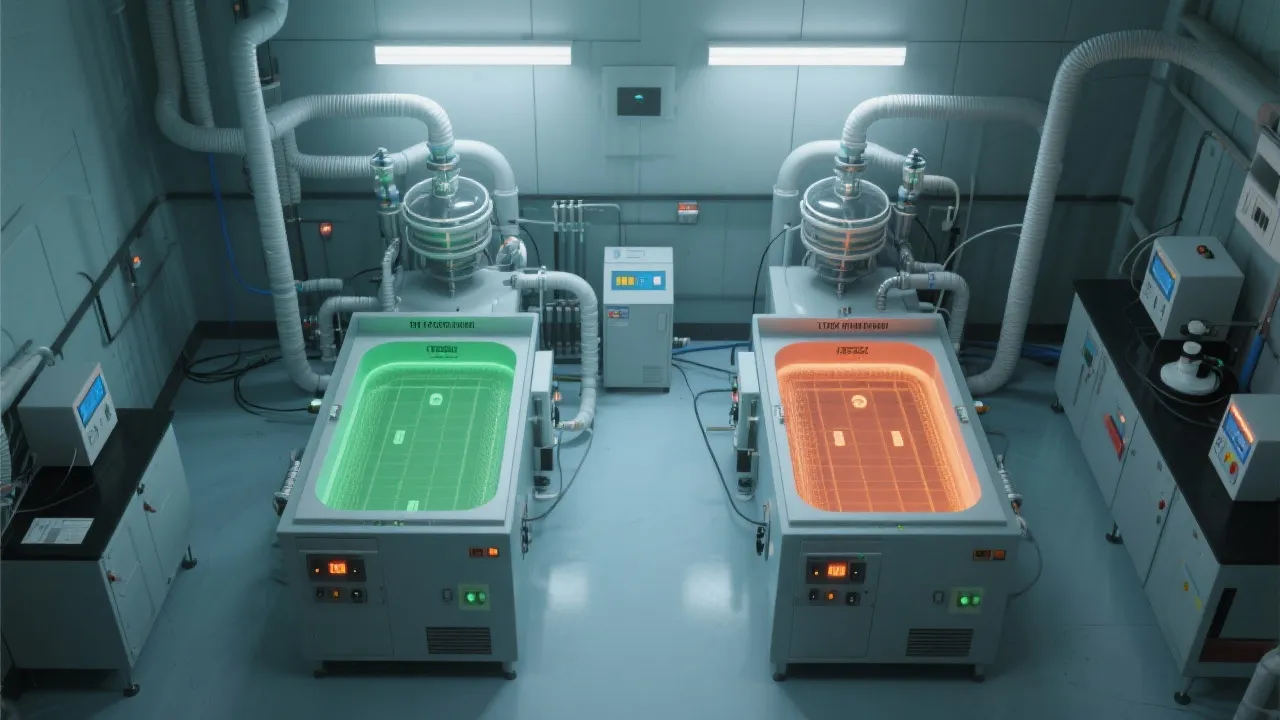
  • Chemical synthesis residue removal: Ultra-high vacuum (<1 kPa) ensures complete evaporation of volatile solvents like acetone or ethanol.

These differences highlight why one-size-fits-all settings don’t work—and why choosing equipment compatible with multiple pump types (rotary vane, diaphragm, or turbomolecular) gives you flexibility across projects.

Avoid Common Mistakes — Dry Smarter, Not Harder

Many users fail because they rush the process or ignore vacuum integrity. A common error? Setting too high a temperature before reaching optimal vacuum—leading to surface carbonization or trapped solvent pockets. Always start with vacuum stabilization (~30 min at target pressure), then gradually increase heat.

Another tip: Monitor chamber pressure during drying. If it rises unexpectedly, it may indicate leaks or outgassing from porous materials—both signs to pause and troubleshoot before continuing.

Want to know which vacuum setting works best for your specific material?

Take our quick 2-question survey — we’ll help you optimize your next drying cycle.

Whether you're working in R&D, quality control, or production, understanding how vacuum affects drying isn't just theoretical—it's essential for consistency, safety, and product performance.

Need Practical Guidance? Get Our Free Vacuum Drying Process Handbook

Download the PDF guide with step-by-step protocols, real-world case studies, and recommended parameters for over 20 common materials—from pharmaceuticals to aerospace-grade composites.

📥 Download Your Copy Today
Name *
Email *
Message*

Recommended Products

Popular articles
Recommended Reading
<#if (articleDetails.articleDetailsRelatedArticles.articleList?has_content)?? && (articleDetails.articleDetailsRelatedArticles.articleList?size>0)> <#if (articleDetails.articleDetailsRelatedArticles.isShow)?? && articleDetails.articleDetailsRelatedArticles.isShow> <#if (articleDetails.articleDetailsRelatedArticles.title)?? && articleDetails.articleDetailsRelatedArticles.title!="">

${articleDetails.articleDetailsRelatedArticles.title}

<#list articleDetails.articleDetailsRelatedArticles.articleList as list>
<#if (list.imgUrl?has_content)?? && (list.imgUrl?has_content)> ${list.imgAlt} <#else> img

${list.title}

${(list.updateTime)?number_to_datetime?string('dd MM ,yyyy')}
Contact us
Contact us
https://shmuker.oss-cn-hangzhou.aliyuncs.com/tmp/temporary/60ec5bd7f8d5a86c84ef79f2/60ec5bdcf8d5a86c84ef7a9a/thumb-prev.png