

Lab Equipment Buying Guide
Choosing a Laboratory Drying Oven: Why Temperature Uniformity and Vacuum Level Decide Your Results
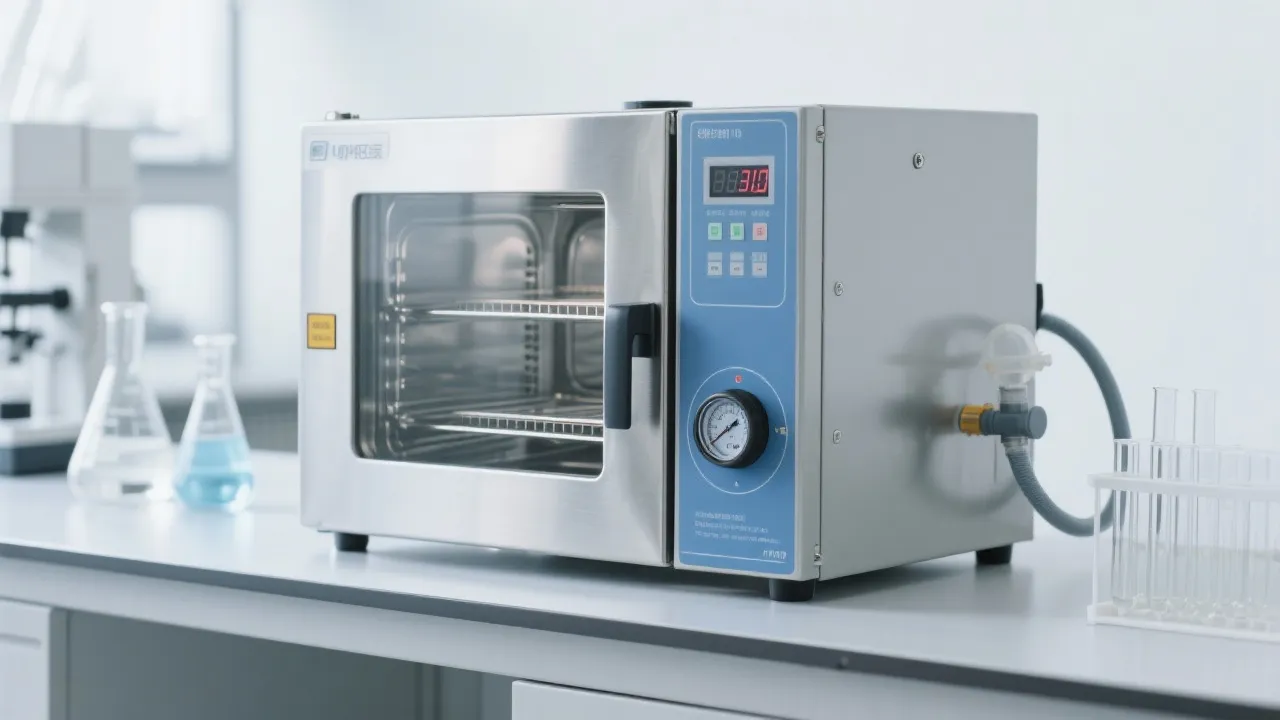
For procurement teams and researchers, a vacuum drying oven is not “just a box that heats.” It is a controlled environment where a few degrees or a few Pascals can determine whether a sample stays stable, oxidizes, warps, or loses activity. Two metrics consistently separate dependable systems from risky ones: temperature uniformity and ultimate vacuum.
Where Buying Decisions Go Wrong (and How to Avoid It)
Many labs start with a familiar checklist—chamber volume, max temperature, and “vacuum” as a yes/no feature. In practice, the pain points appear after installation: uneven drying between shelves, unexpected discoloration of sensitive powders, inconsistent moisture endpoints, and long cycle times that quietly reduce throughput.
A more reliable approach is to evaluate a vacuum drying oven the way experienced QC teams do: focus on what impacts repeatability and sample integrity. That means measuring and validating:
- Temperature uniformity across the usable workspace (not just a single-point display accuracy).
- Ultimate vacuum level and stability (how low it goes and how well it holds).
- Heat transfer method (wall heating vs. single heater vs. shelf-only layouts) and its effect on gradients.
- Leak rate indicators (pump-down curve, pressure rise test) that predict long-term performance.
Core Metric #1: Temperature Uniformity (Not Just “Accuracy”)
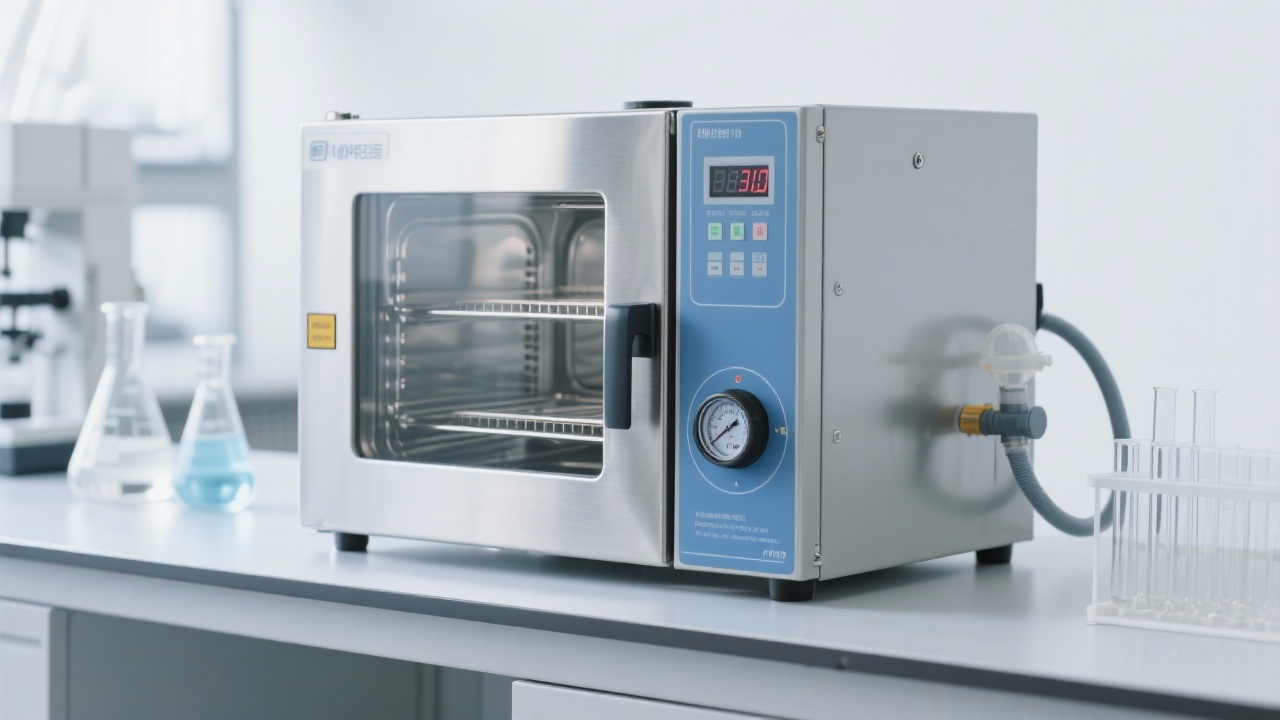
Procurement specs often list controller accuracy (for example, ±0.5°C), but a sample is affected by the temperature distribution in the chamber. Uniformity is the practical predictor of whether a batch dries evenly, whether solvents boil off consistently, and whether biologically active components remain stable.
What “good” looks like in real lab use
In many research and light industrial workflows, a commonly accepted target is ≤±2°C uniformity at a representative setpoint (e.g., 50–80°C). For heat-sensitive materials or tightly controlled protocols, ≤±1°C is often the difference between publishable repeatability and frustrating rework.
Why DZ-3BCII is designed around “precise temperature control”
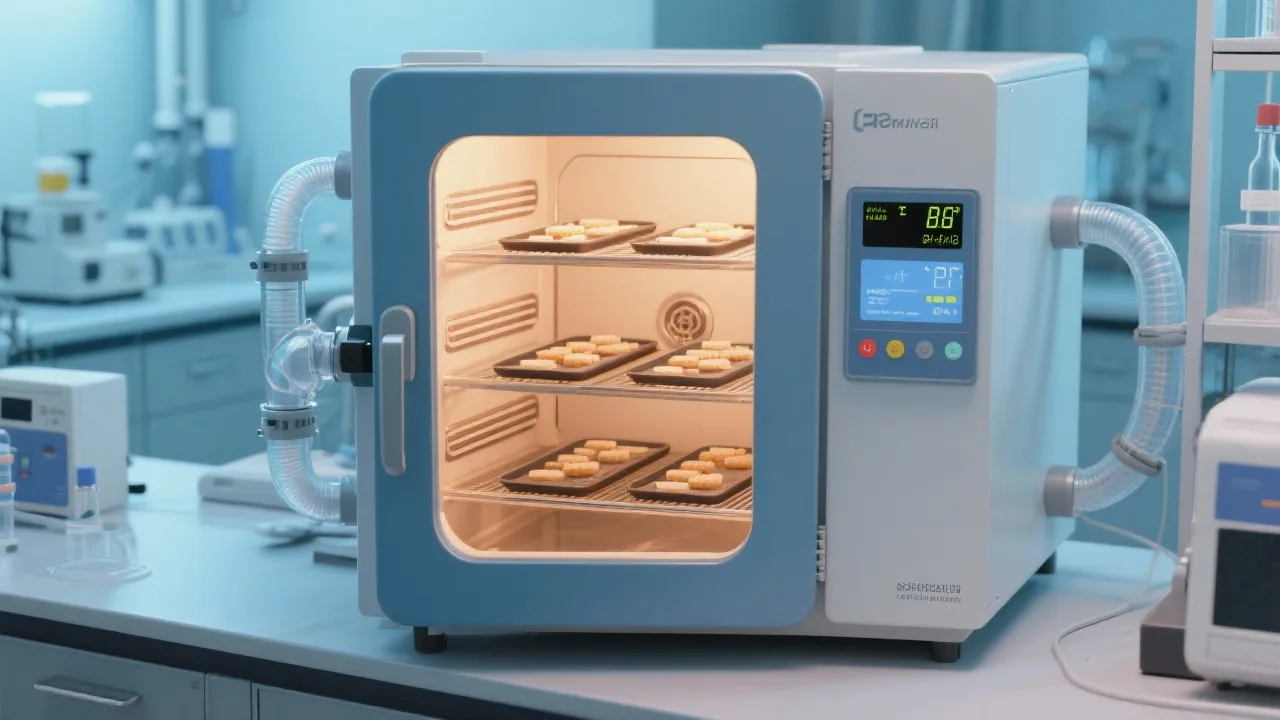
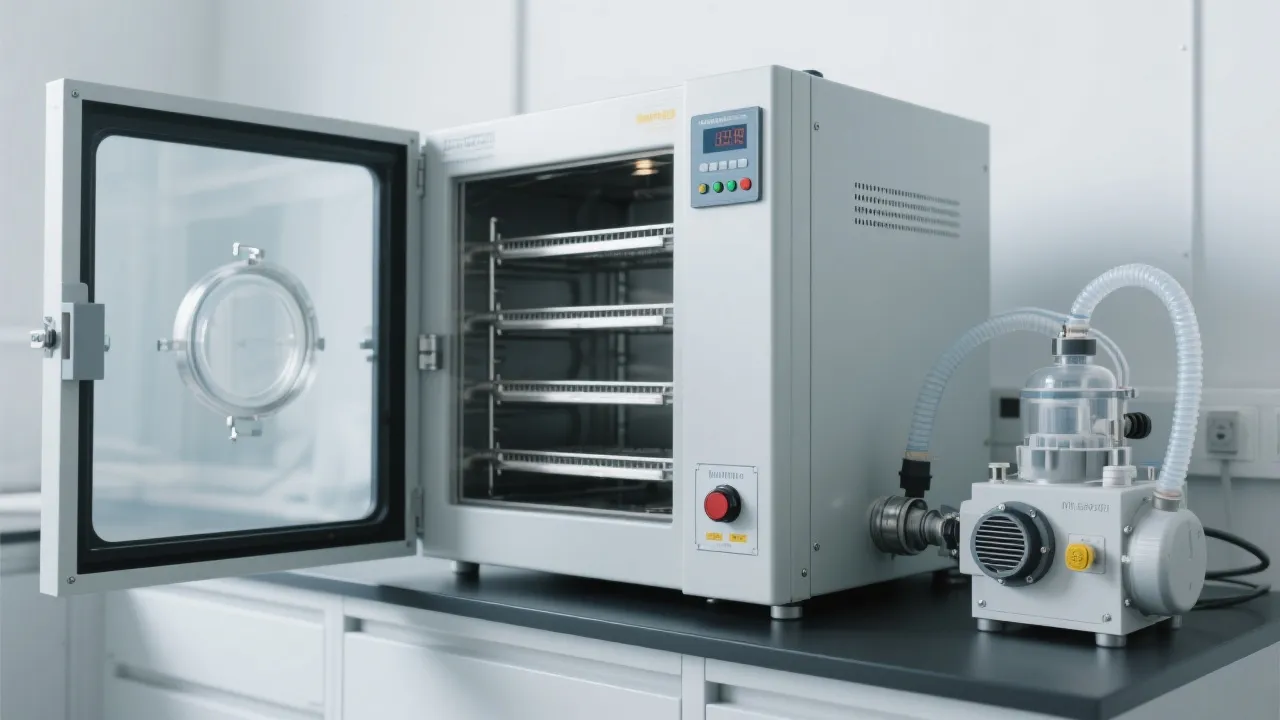
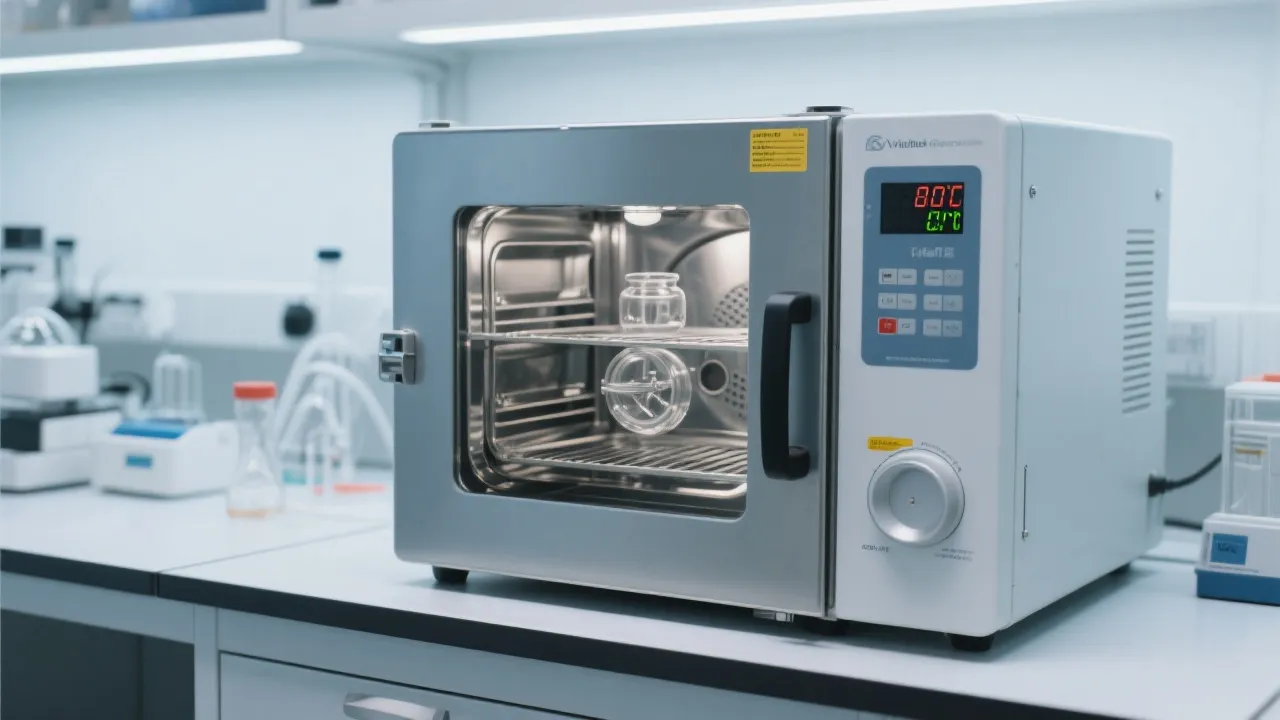
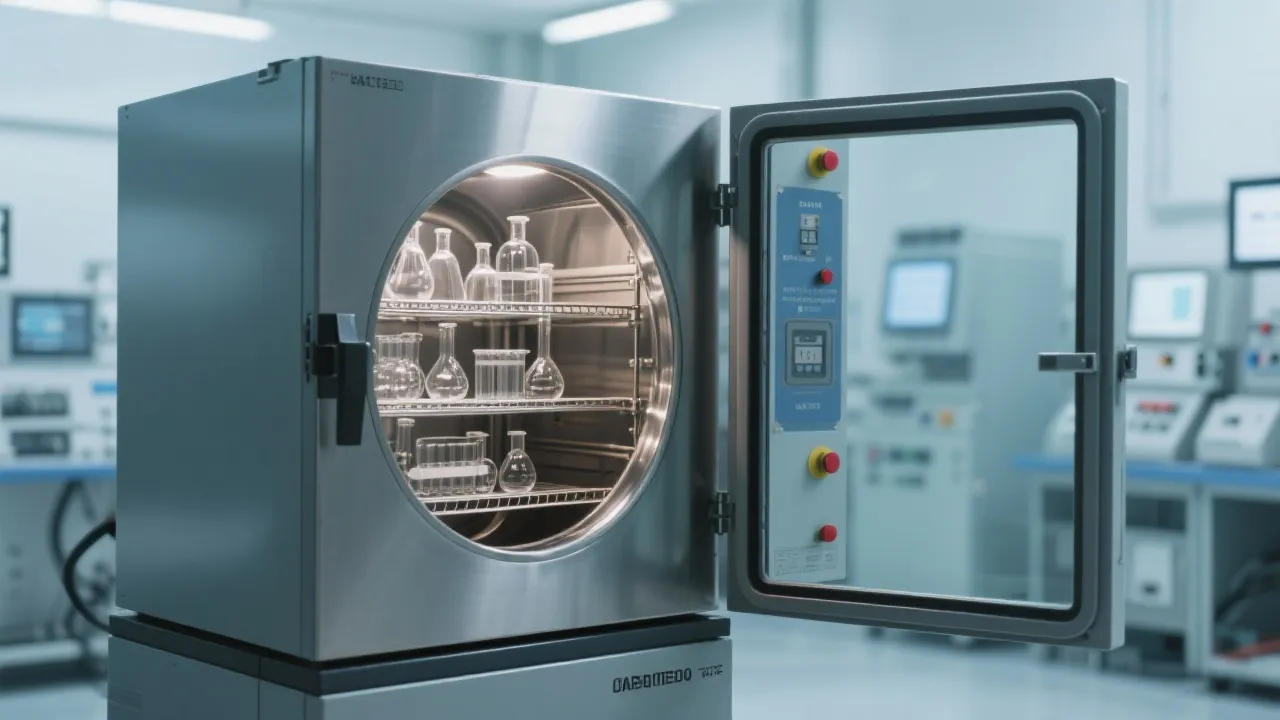
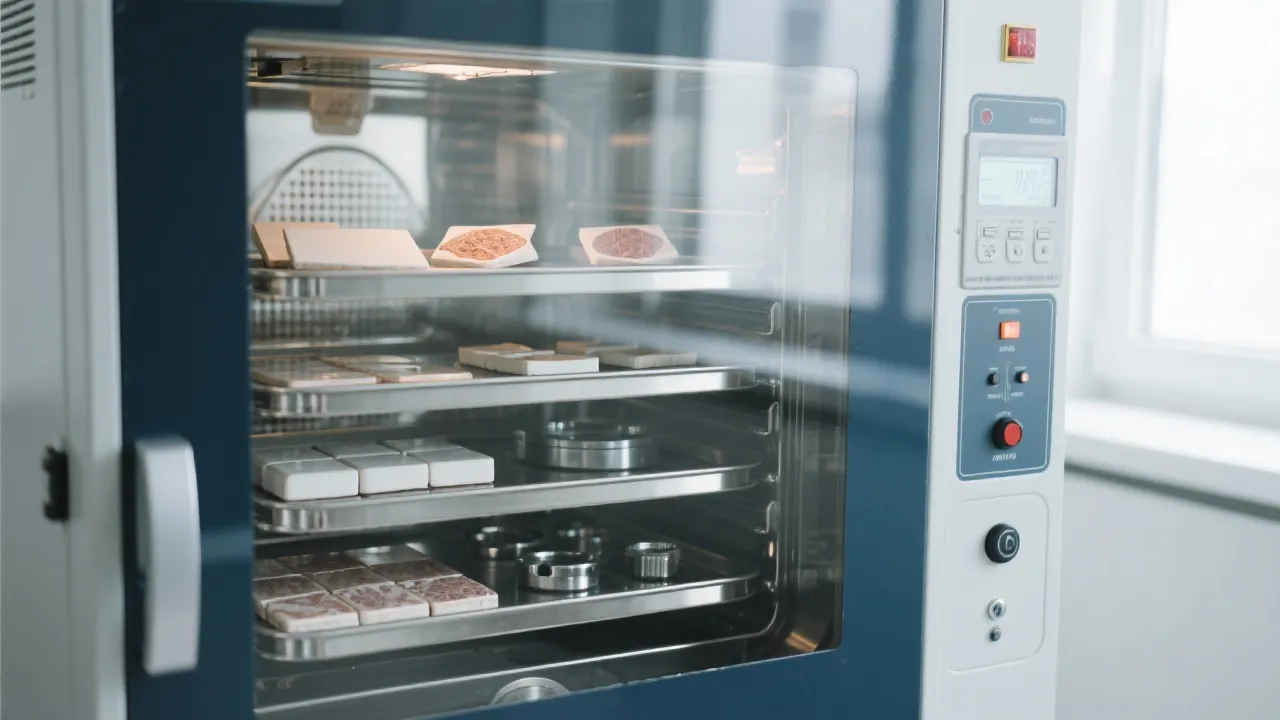
The DZ-3BCII digital vacuum drying oven is engineered to minimize gradients rather than merely display a stable number. Two design choices matter:
PID Intelligent Control
PID tuning helps reduce overshoot and oscillation, which protects samples from unintended thermal spikes—especially during ramp-up and recovery after door events.
Four-Side Heating (Wall Heating)
Heat introduced from multiple surfaces improves distribution and reduces “hot corners / cold corners,” supporting stable, uniform drying across trays.
Core Metric #2: Vacuum Level and Stability (Where Drying Speed Comes From)
Vacuum drying is not only about “removing air.” Lower pressure reduces the boiling point of solvents and accelerates mass transfer. It also limits oxygen exposure, enabling anti-oxidation protection for materials that darken, degrade, or lose activity in ambient conditions.
A practical reference point: <133 Pa (≈1 Torr)
A high-vac laboratory oven typically aims for an ultimate vacuum around <133 Pa. At approximately 133 Pa, water can boil near room temperature (around ~20°C), which is why heat-sensitive products can be dried at lower setpoints without forcing aggressive heating.
| Parameter | Why it matters | Practical benchmark | DZ-3BCII reference |
|---|---|---|---|
| Ultimate vacuum | Lower boiling point, faster drying, less oxidation | ≤133 Pa for high-vac lab drying | <133 Pa |
| Pressure stability | Predictable endpoints; indicates sealing and leak control | Low drift after pump-down | Designed for stable vacuum holding |
| Low-temp drying capability | Protects heat-sensitive samples; reduces degradation | Dry at 25–60°C depending on solvent | Optimized for low-temp vacuum workflows |
In procurement conversations, it is useful to request two simple validation items: a pump-down curve (time to reach a specified pressure) and a pressure rise test (pressure increase after isolation). These reveal whether “<133 Pa” is a repeatable operating point or an occasional best-case.
DZ-3BCII vs. Conventional Ovens: What Changes in Daily Work
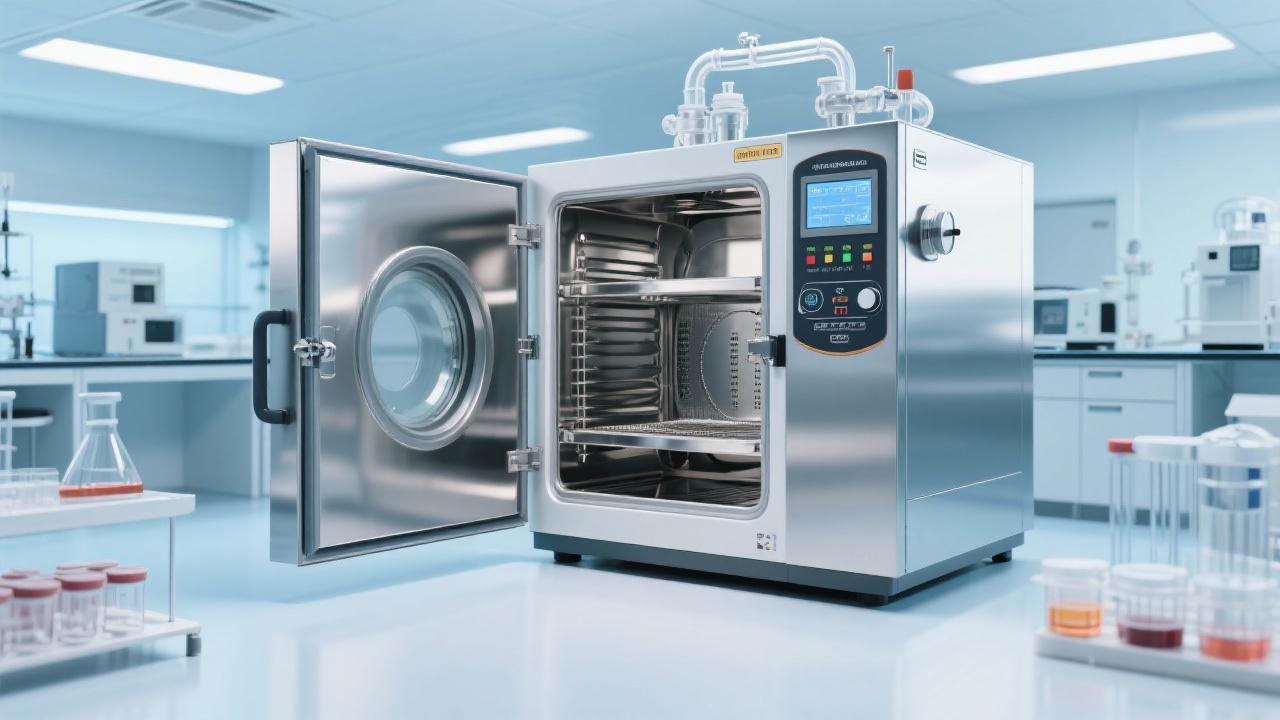
A conventional hot-air drying oven can be adequate for robust materials where oxidation risk is low and minor gradients are acceptable. But when samples are expensive, unstable, or tied to regulatory documentation, the environment control becomes the product.
Protection of heat-sensitive materials
With precise temperature control and a <133 Pa vacuum environment, protocols can shift from “hot and fast” to “low-temperature and controlled,” reducing risks such as denaturation, discoloration, or solvent trapping.
Anti-oxidation protection by design
Lower oxygen availability helps protect oxidation-prone formulations and sensitive electronic parts. For many labs, this directly improves pass rates and reduces repeat tests.
91L large capacity, flexible operation
A 91L chamber supports larger batch sizes or multiple projects in parallel—useful in shared labs, pilot lines, and QC rooms where scheduling matters as much as specs.
Typical Applications That Benefit from High Uniformity + High Vacuum
The strongest fit for a digital vacuum drying oven like the DZ-3BCII is any workflow where the product value is high, the tolerance window is tight, or oxygen exposure is a known hazard.
Pharmaceuticals & fine chemicals
Drying APIs, intermediates, or hygroscopic powders where residual solvent control matters. Vacuum and uniform heating can reduce hotspots that drive degradation or polymorph shifts.
Biological samples & research materials
Gentle drying of temperature-sensitive samples where lower setpoints and stable conditions help preserve activity and repeatability across experiments.
Electronics components & advanced materials
Moisture removal before encapsulation, coating, or assembly. The anti-oxidation protection of low-oxygen environments can be valuable for oxidation-prone surfaces and specialty polymers.
What Global Buyers Usually Ask (and the Answers That Matter)
- How do you verify temperature uniformity?
- A practical method is multi-point mapping with calibrated sensors at several locations and shelves, then reporting the max deviation from setpoint (often expressed as ±°C) after stabilization.
- Is “<133 Pa” enough for low-temperature drying?
- For many lab solvents and moisture removal tasks, yes—because reduced pressure can significantly lower effective boiling points and speed mass transfer. Stability and leakage control are equally important for repeatability.
- What about long-term reliability and export support?
- For international procurement, documented quality control, consistent performance records, and experienced export handling reduce downstream risk. A supplier with 13+ years of export experience typically provides clearer documentation workflows and smoother cross-border coordination.
Ready to Specify a DZ-3BCII Digital Vacuum Drying Oven for Your Lab?
If your project requires precise temperature control (targeting uniformity down to ±1°C), a stable high-vac environment (<133 Pa) for anti-oxidation protection, and a 91L large capacity that keeps workflows flexible, the DZ-3BCII is built for that reality.