
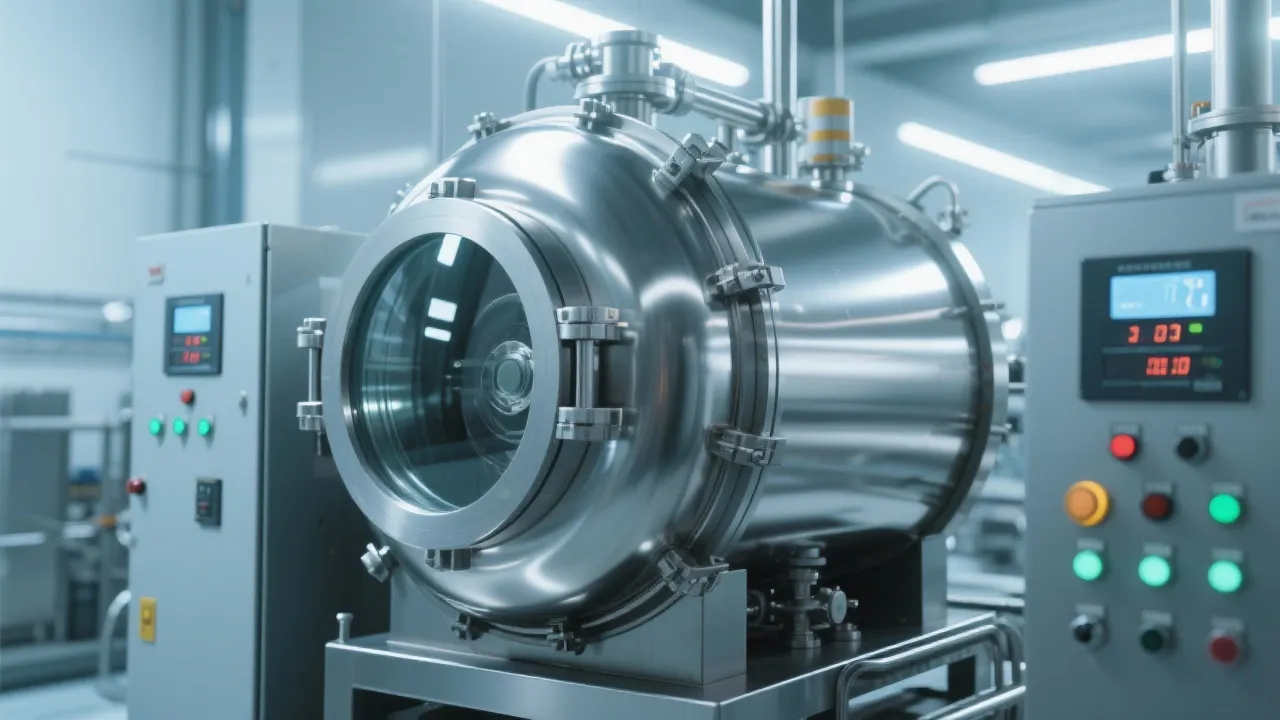
In high-precision industries like electronics manufacturing, even trace moisture can compromise product reliability and performance. That’s where vacuum drying technology steps in—not just as a process, but as a quality enabler.
Unlike conventional drying methods that rely on heat alone, vacuum drying removes moisture under reduced pressure—allowing water to evaporate at much lower temperatures (typically between 40°C–80°C). This is especially critical for sensitive materials such as printed circuit boards (PCBs), capacitors, and semiconductor components that may warp or degrade if exposed to high thermal stress.
Why It Works: At atmospheric pressure, water boils at 100°C—but in a vacuum chamber, it can boil at 40°C or even lower. This means faster drying without damaging heat-sensitive substrates. Studies show this method reduces drying time by up to 40% compared to hot-air ovens while improving consistency across batches.
Real-World Impact: A leading PCB manufacturer in Shenzhen reported a 27% reduction in post-process defects after switching from convection drying to vacuum drying using the DZ-2BCII model from Zhengzhou Keda. Their yield rate improved from 92% to 97.5% within three months—without increasing energy costs.
These parameters aren’t just technical specs—they’re the foundation of repeatable, scalable production. Whether you're processing small batches for R&D or large-volume orders for OEM clients, mastering these variables ensures both compliance with IPC standards and customer satisfaction.
While electronic components are a top application, vacuum drying also excels in:
This versatility makes vacuum drying not only a niche solution—it's an essential part of modern industrial workflows.
Q: Is vacuum drying suitable for batch sizes below 10 units?
A: Yes—with models like the DZ-2BCII, you get flexibility for small runs without sacrificing efficiency or repeatability.
Q: How do I choose the right vacuum level?
A: Start with 50 mbar for most electronics; adjust based on material sensitivity and desired drying speed.





 <#else>