
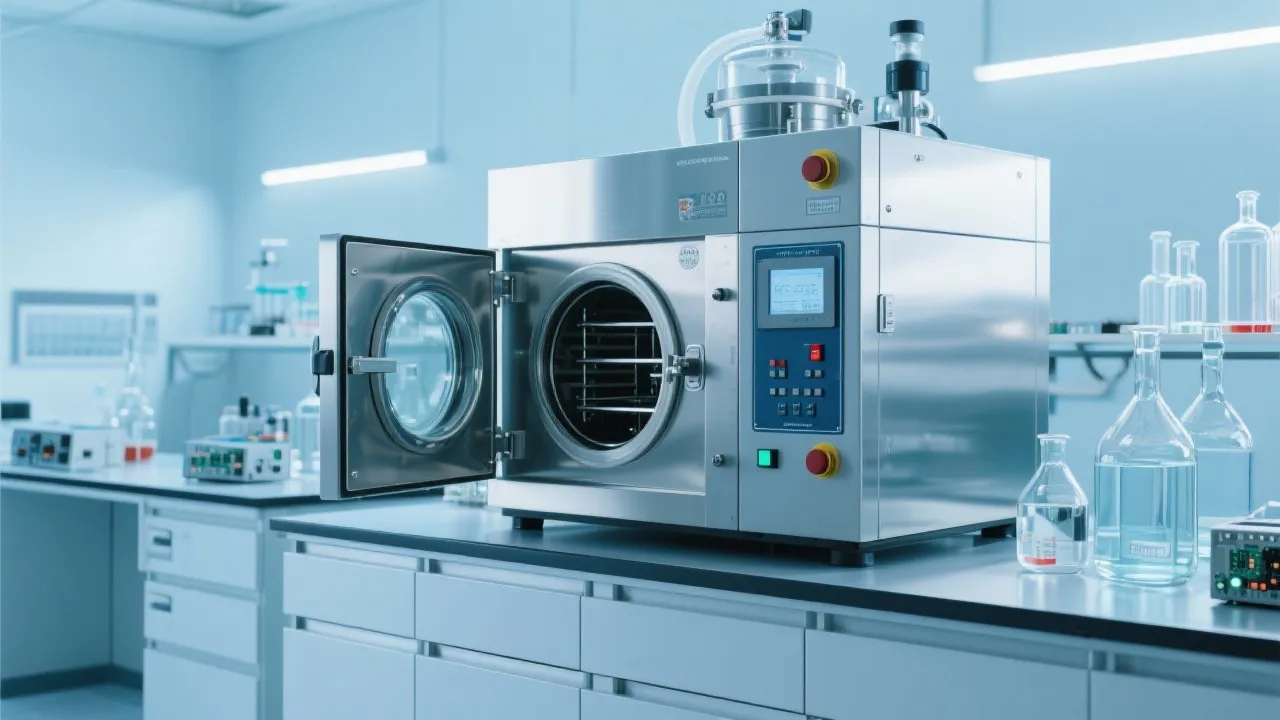
In both academic research and industrial production, precise drying of heat-sensitive materials—like pharmaceuticals, polymers, and electronic components—is critical to maintaining sample integrity, process repeatability, and final product quality. Traditional air-drying methods often cause oxidation, decomposition, or uneven moisture removal. That’s where the DZ-3BCII Digital Vacuum Drying Oven steps in—not just as equipment, but as a precision solution engineered for labs and production lines worldwide.
| Feature | Performance |
|---|---|
| Vacuum Level | < 133 Pa – Prevents thermal degradation |
| Temperature Uniformity | ±1°C across chamber – Ensures consistent results |
| Heating Method | Four-wall uniform heating – No hot spots |
| Control System | Smart PID regulation – Stable, repeatable cycles |
These specs aren’t just numbers—they translate directly into real-world benefits. For example, researchers working with biologics or APIs (Active Pharmaceutical Ingredients) report up to 40% faster drying times without compromising molecular structure when using vacuum-assisted systems like the DZ-3BCII. Meanwhile, QA teams in semiconductor manufacturing have noted a 92% reduction in post-dry defects due to better temperature control and lower oxygen exposure.
Whether you're developing new drug formulations in a university lab or optimizing batch consistency in a high-volume factory, this oven adapts. In one case study from a German pharmaceutical R&D center, scientists used the DZ-3BCII to dry lyophilized powders at 45°C under vacuum instead of 70°C in ambient air. The result? Zero degradation in active compound potency over 12 consecutive runs—a win for both safety and compliance.
And here’s something many overlook: durability. With over 13 years of global exports, the DZ-3BCII has been tested in extreme environments—from Dubai’s desert heat to Sweden’s sub-zero winters—and still delivers reliable performance year after year.
Have you ever struggled with inconsistent drying results or sample damage during processing? You’re not alone. Many users initially assumed their issues were due to material variability—but once they switched to low-vacuum drying, the problem vanished.
“The difference between good and great drying isn’t just about time—it’s about control. This oven gives us that level of precision we can trust.”
— Dr. Lena Müller, Senior Researcher, Max Planck Institute


 <#else>