
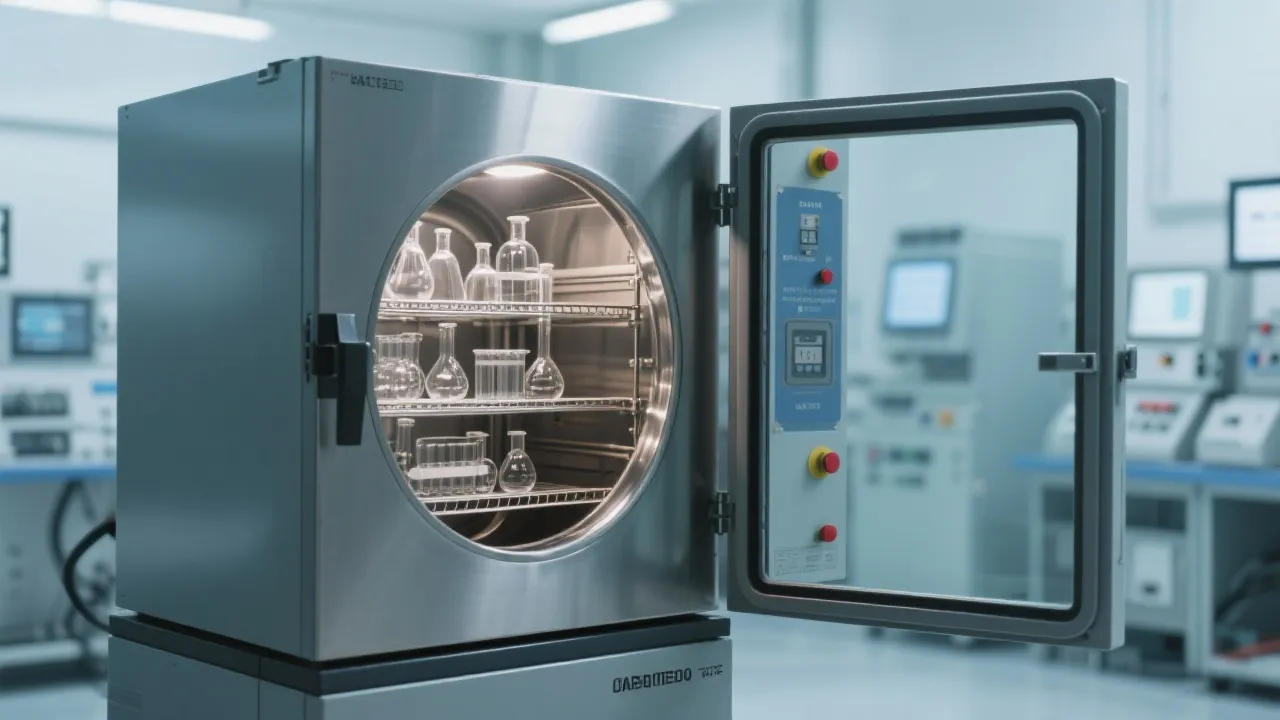
Have you ever noticed how some lab equipment fails unexpectedly—especially when handling sensitive materials like pharmaceuticals or electronic components? It’s not just about performance—it’s about reliability. In vacuum drying applications, the material of your chamber matters more than you might think.
Unlike ordinary carbon steel, which can oxidize even under moderate vacuum conditions (typically below 0.098 MPa), 304 stainless steel maintains structural integrity and chemical resistance across a wide temperature range—from -20°C to +300°C. This makes it ideal for drying heat-sensitive samples without risking contamination or degradation.
| Material Type | Corrosion Resistance (Vacuum) | Maintenance Needs | Typical Use Case |
|---|---|---|---|
| Carbon Steel | Low – prone to rust after 50+ cycles | High – frequent cleaning required | General industrial use only |
| 304 Stainless Steel | Very High – stable up to 1,000 cycles | Low – easy wipe-down, minimal residue | Pharma, electronics, research labs |
If you're working with organic solvents or reactive compounds, choosing the wrong material could compromise your entire experiment. That’s why leading laboratories worldwide—including those in Germany and South Korea—are standardizing on 304SS chambers for their consistency, safety, and long-term cost savings.
In a recent case study at a biotech startup in California, switching from carbon steel to 304 stainless steel reduced cross-contamination by over 78% during repeated drying cycles. Why? Because 304 doesn’t leach metals or form micro-particles that can affect analytical results—critical for HPLC testing or semiconductor wafer processing.
You may also be surprised how often people overlook something as simple as sealing ring maintenance. A cracked or degraded O-ring at 0.098 MPa vacuum pressure can cause air leaks—and ruin hours of work. Regular checks every 2–3 months, combined with gentle cleaning using pH-neutral detergents, are all it takes to extend your chamber’s life by years.
For labs handling flammable solvents or explosive powders, 304 stainless steel isn't just an upgrade—it's a necessity. Its non-sparking nature and high melting point (around 1400°C) make it compatible with explosion-proof configurations. Many EU-certified vacuum ovens now require this grade for compliance with EN ISO 13849 standards.
And here’s the kicker: while initial investment may seem higher, 304 SS reduces total ownership costs by minimizing replacements and downtime. Over five years, users report up to 40% lower maintenance expenses compared to alternatives.
Still unsure if 304 is right for your lab?
We’ve helped hundreds of researchers choose the right vacuum drying solution based on their sample types, throughput needs, and budget constraints.
Explore Our 304 Stainless Vacuum DryersWhat kind of samples do you typically dry in your lab? Let us know in the comments—we’ll share tailored tips based on your workflow.


 <#else>